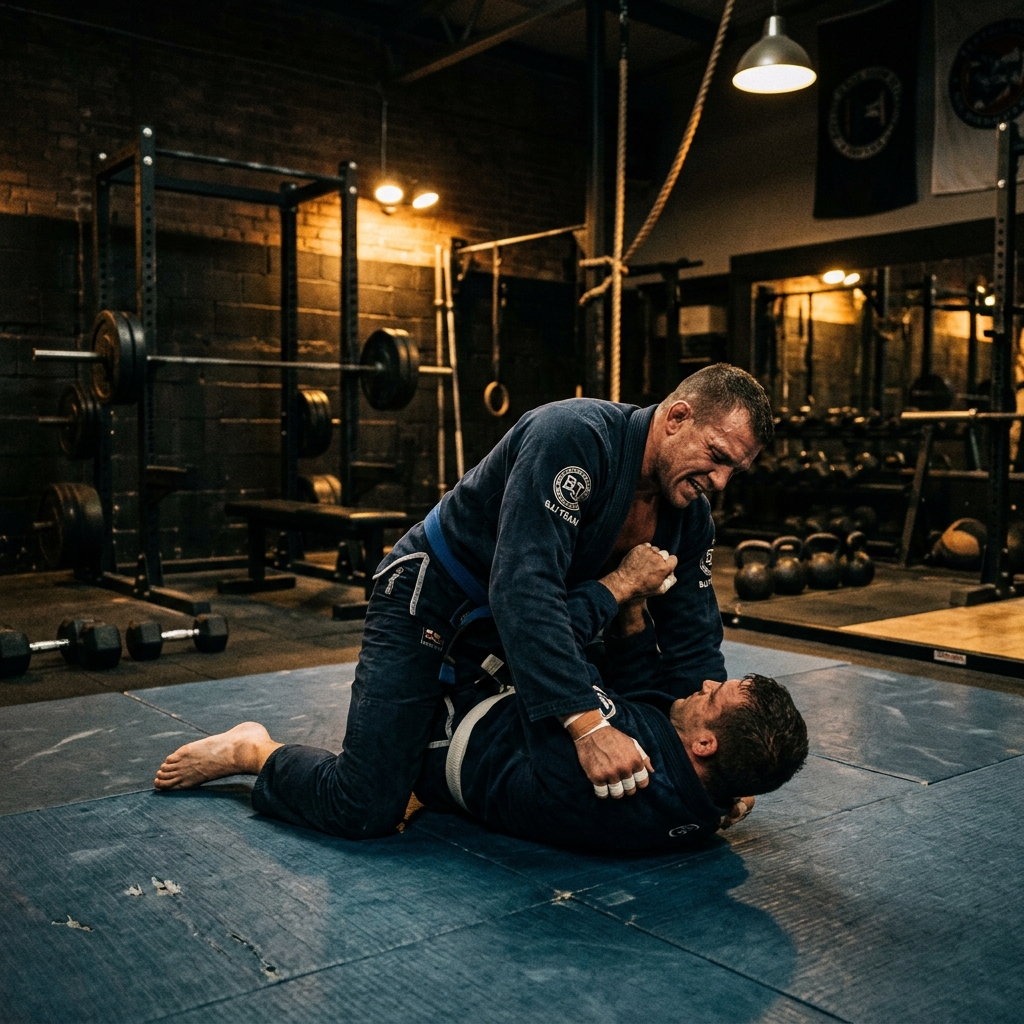
Combat sports athletes have one of the most complex programming challenges in all of fitness. A boxer only needs to box and condition. A powerlifter only needs to squat, bench, and deadlift. But an MMA fighter? They need to strike, grapple, wrestle, lift weights, do conditioning work, and somehow recover from all of it — in a single week, every week, for months and years at a time.
The key to making this work isn't training more. It's training smarter. A well-designed weekly split ensures that every session has a clear purpose, that hard days are genuinely hard, that easy days are genuinely easy, and that your body has adequate time to recover and adapt. Let's build that split from the ground up.
Understanding Training Demands
Before programming a single session, you need to categorize the demands of combat sports training. There are four primary training buckets that need to be addressed each week:
- Skill work (striking technique, grappling drills, positional sparring) — moderate to high CNS demand, moderate physical demand
- Live sparring (full-contact or controlled rounds) — very high CNS demand, very high physical demand
- Strength training (compound lifts, accessory work) — high muscular demand, moderate to high CNS demand
- Conditioning (aerobic base, anaerobic intervals, fight-specific circuits) — high cardiovascular demand, variable recovery cost
The mistake most fighters make is treating every session like a war. When everything is hard, nothing recovers properly, and you end up overtrained, injured, or both. The solution is deliberate programming with clear intensity management.
The 6-Day Combat Athlete Split
Here's a proven template used by many amateur and professional fighters. Adjust based on your experience level, competition timeline, and recovery capacity.
- Monday — AM: Striking skill work (technical focus, bag work, pad work). PM: Strength training (upper body emphasis — bench, rows, overhead press, pull-ups)
- Tuesday — AM: Grappling/BJJ class (drilling + positional sparring). PM: Zone-2 conditioning (30–40 min easy jog, bike, or swim)
- Wednesday — REST or light mobility/yoga session
- Thursday — AM: Striking sparring (controlled rounds). PM: Strength training (lower body emphasis — squats, deadlifts, lunges, core work)
- Friday — AM: Grappling live rounds (higher intensity). PM: Anaerobic conditioning (intervals, sprints, Tabata circuits)
- Saturday — Open mat, light technical work, or makeup session
- Sunday — FULL REST — no training, active recovery only
Notice the pattern: the hardest sessions (sparring, live grappling, heavy strength work) are followed by rest or lighter sessions. Monday and Thursday are the primary loading days. Wednesday and Sunday are full recovery days. This wave pattern of hard-easy-hard is essential for long-term progression without burnout.
Strength Training for Fighters: What Actually Matters
Many combat athletes either skip strength training entirely or do too much of it. Both extremes hurt performance. The sweet spot for most fighters is two strength sessions per week, focused on compound movements that transfer directly to fight performance.
Prioritize these exercises: barbell back squats (hip power for takedowns and clinch work), deadlifts (posterior chain strength for grappling), bench press or weighted dips (pushing power for frames and strikes), pull-ups or barbell rows (pulling strength for clinch and grappling), and overhead press (shoulder endurance and striking power). Keep the rep range at 3–6 for primary lifts and 8–12 for accessories. Rest 2–3 minutes between heavy sets.
The goal isn't to look like a bodybuilder. It's to be strong relative to your weight class. Track your lifts in MaxGrind alongside your combat training to see how your strength numbers correlate with your in-ring performance over time.
Managing Fatigue and Peaking for Competition
If you have a fight or competition approaching, your training split needs to evolve. The general principle is: as the fight gets closer, technical work increases and volume decreases. In the final two weeks before a fight, most coaches cut sparring intensity, reduce strength training to maintenance levels, and focus on sharpening specific game plans.
During a general preparation phase (no fight scheduled), you can push volume higher — adding an extra sparring session, increasing strength training loads, or incorporating more conditioning work. This is when you build your engine. The specific preparation phase (6–8 weeks out from competition) is when you fine-tune that engine for race day.
Recovery Is Non-Negotiable
No split works if your recovery doesn't match your training demands. Sleep 7–9 hours per night — this is when muscle repair and motor learning consolidation happen. Eat sufficient calories and protein to support your training volume. Use contrast showers, foam rolling, and light movement on rest days to promote blood flow without adding training stress.
Start logging your training with MaxGrind to track weekly volume across all modalities — striking, grappling, strength, and conditioning. When you can see your total load in one dashboard, you can make intelligent decisions about when to push and when to pull back. Smart fighters don't just train hard — they train sustainably.